
The Lexicon of Power
How Diplomatic Language Conceals Global Violence

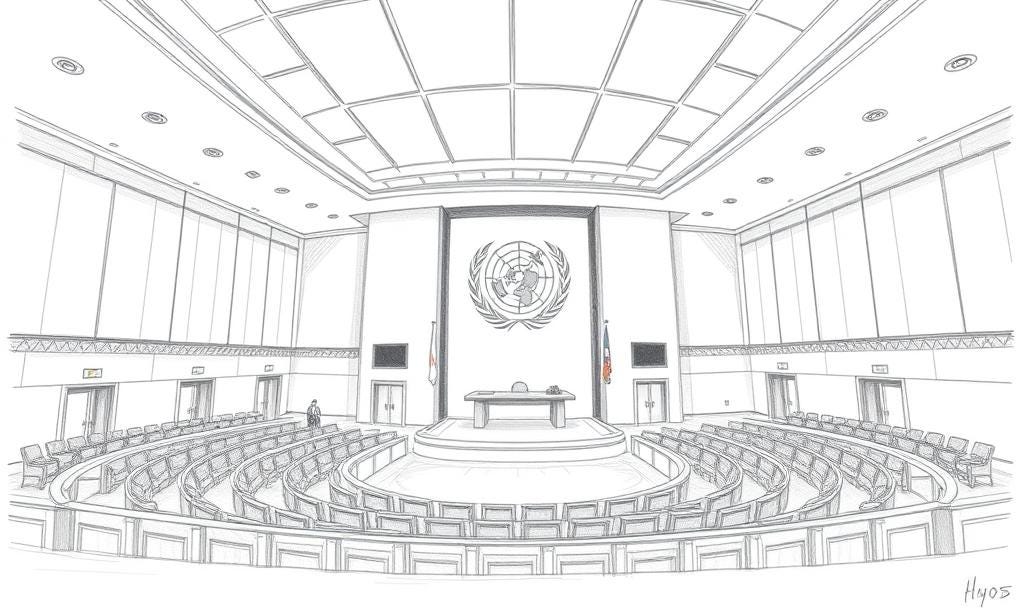
From the chambers of the United Nations to the wood-paneled rooms of foreign ministries worldwide, the machinery of global power functions through deliberately crafted language that obscures more than it reveals. Presidents and prime ministers, ambassadors and spokespeople – they do not simply speak. They deploy words as strategic weapons, each phrase calculated to advance interests while deflecting responsibility.
When an American Secretary of State announces “targeted kinetic operations” in Yemen, people die. When a Russian diplomat references “peacekeeping missions” in neighboring territories, tanks cross borders. When Chinese officials speak of “internal security matters,” prison camps expand. This is not miscommunication but precisely engineered language designed to transform the brutal reality of state violence into something palatable for press conferences and summit declarations.
The Arsenal of Diplomatic Deception
The phrase “all options remain on the table” has echoed from Washington to Tehran, from Jerusalem to Pyongyang. It deserves translation: military strikes – perhaps even nuclear weapons – are being contemplated. The deliberately vague phrasing allows governments to threaten violence while maintaining an air of reasonable statesmanship. It is the diplomatic equivalent of a mafioso suggesting “unfortunate accidents” might befall those who refuse cooperation.
In the blood-soaked hills of Rwanda in 1994, Western diplomats spoke solemnly of “acts of genocide” – carefully avoiding the singular term “genocide” that would have triggered legal obligations to intervene. While officials debated terminology, 800,000 Tutsis were slaughtered. Twenty years later in Myanmar, the same linguistic games played out as Rohingya villages burned. The phrase “ethnic tensions” appeared in diplomatic communications while systematic rape and murder unfolded.
What officials call “promoting democratic values” has meant the overthrow of elected governments in Chile, Iran, Guatemala, and dozens of other nations. The benign terminology conceals the installation of compliant regimes favorable to the economic interests of powerful states. The gap between language and reality could hardly be wider – democratic legitimacy destroyed in the name of democratic values.
“Strategic partnership” often describes relationships between nations with wildly unequal power – the wolf partnering with the lamb. When Western diplomats speak of “economic engagement” with African nations while multinational corporations extract resources worth billions for pennies on the dollar, the language disguises exploitation as cooperation. These are not partnerships but the modern expression of colonial relationships draped in the vocabulary of mutual benefit.
The Human Cost of Calculated Ambiguity
The consequences of diplomatic doublespeak fall most heavily on those who lack power to contest these narratives. In Gaza and the West Bank, what officials term “security measures” translate to checkpoints that prevent cancer patients from reaching hospitals and children from attending schools. The antiseptic phrase “settlement construction” obscures bulldozed homes and displaced families. Each carefully chosen term serves to distance decision-makers from the human suffering their policies create.
When the term “extraordinary rendition” entered diplomatic vocabulary following the 2001 terrorist attacks, it concealed the kidnapping and torture of suspects across borders – some guilty, many innocent. The clinical terminology masked men being bound, drugged, and transported to countries known for brutal interrogation tactics. The families who waited years for information about disappeared relatives experienced nothing “extraordinary” – only the ordinary cruelty of states operating beyond accountability.
In climate negotiations, diplomatic language about “nationally determined contributions” and “common but differentiated responsibilities” masks the fundamental reality: powerful nations continue producing catastrophic emissions while island nations literally disappear beneath rising seas. The language of diplomacy creates the illusion of action where there is mainly obfuscation and delay.
“Humanitarian intervention” – perhaps the most perverse phrase in the diplomatic lexicon – has accompanied the bombing of Belgrade, the destruction of Libya, and countless other military actions. The coupling of “humanitarian” with high-altitude bombing campaigns represents the ultimate corruption of language. Villages reduced to rubble, infrastructure destroyed for decades, societies fractured along sectarian lines – all conducted under the banner of humanitarian concern.
The Architecture of Unaccountability
The global press, with notable exceptions, functions largely as stenographers to power – dutifully reporting diplomatic pronouncements without translation. News headlines echo official terminology: “Israel Responds to Attacks” rather than “Israeli Forces Bomb Densely Populated Areas.” “Coalition Forces Conduct Operations” rather than “Western Jets Strike Wedding Party.” Each uncritical repetition of official language further normalizes the disconnect between words and reality.
In diplomatic communiqués from the G7 or G20, leaders “express deep concern” about humanitarian crises they themselves have either created or have the power to resolve. They “urge restraint” from belligerents they continue arming. They “condemn in the strongest terms” atrocities while maintaining lucrative trade relationships with the perpetrators. The language creates an elaborate theater of concern that rarely translates to meaningful action.
The diplomatic term “frank and productive exchange” typically signals acrimonious disagreement. “Constructive engagement” has justified decades of support for apartheid regimes and authoritarian governments. “Regrettable incident” stands in for war crimes and civilian casualties. Each euphemism serves to drain moral urgency from situations that demand it most desperately.
The very structure of diplomatic communication – passive voice constructions, abstract nouns, bureaucratic terminology – functions to obscure agency. “Mistakes were made” becomes the standard formulation, never “we bombed the wrong target and killed civilians.” This systematic elimination of responsibility represents not linguistic clumsiness but deliberate strategy.
Breaking the Code of Complicity
Honest international relations would require language that acknowledges rather than obscures reality. This transformation demands:
Precision about violence. When military forces kill civilians, diplomatic language should state this directly rather than referring to “collateral damage” or “unintended consequences.”
Acknowledgment of history. The legacy of colonialism, exploitation, and intervention cannot be erased by referring to “developing nations” or “emerging economies” – terms that suggest natural processes rather than deliberately created conditions.
Recognition of power. “International community” often means simply Western powers and their allies. Honest diplomacy would acknowledge whose voices dominate global discourse and whose remain marginalized.
Concrete commitments. Phrases like “redoubling efforts” or “strengthening resolve” serve mainly to create the impression of action. Real diplomatic progress requires specific, measurable obligations with mechanisms for enforcement.
In diplomatic corridors from Moscow to Washington, from Beijing to Brussels, language serves as both weapon and shield – deployed to advance interests while deflecting accountability. The gap between diplomatic pronouncements and ground-level realities reveals not failure of communication but its dark success: the ability to wage war, extract resources, and project power while maintaining a veneer of reasonableness.
The language of diplomacy reflects the nature of global power itself – hierarchical, self-protecting, and fundamentally undemocratic. A world order that cannot speak honestly about itself cannot deliver honest solutions to collective challenges. The citizens of every nation deserve diplomatic language that illuminates rather than obscures, that facilitates understanding rather than manipulates it.
When diplomatic language begins to reflect reality rather than conceal it, perhaps global politics will finally serve human needs rather than merely national interests.
This analysis is part of our ongoing “BS Translator” series, examining how institutions deploy language to shape public perception rather than illuminate reality. Follow along as we continue to expose how institutions use language to influence rather than inform.